
In Africa, policy interest in the ‘young people – agriculture nexus’ focuses almost exclusively on the challenge of keeping young people in rural areas and engaged in farming. This approach ignores important drivers, trends and developments that are impacting on both young people’s aspirations and the structure of the agrifood sector. In the coming years the agrifood sector in Africa will undergo significant transformation that will result in both challenges and opportunities for young people, depending on who and where they are. Perhaps most importantly, the agrifood sector will become an increasingly important source of formal employment for young people, with a significant expansion of employment opportunities in food marketing, processing, retail, catering, research, input sales etc. These jobs will generally require higher levels of education and different skills, and many will be located in or near urban areas.
It is this context that the conference will critically examine, from both research and policy perspectives:
- Dominant and alternative framings and narratives, and recent empirical data, relating to how young people engage with the agrifood sector in Africa (as producers, entrepreneurs, employees, consumers and citizens)
- The dynamics of change in different components of the agri-food sector and the implications of these dynamics for young people
- The implications for young people of alternative policy approaches to the development of the agri-food sector
Throughout, the need to consider different categories of young people and importance of different situations and places will be emphasised. Conflict will be one of the ‘situations’ that will be highlighted.
Through this conference we hope to help shift the debate away from questions such as “How can farming be made more attractive to young people?” toward a broader analysis of the opportunities and challenges for different categories young people in different situations associated with on-going and likely future changes within the broader agri-food system. Such an analysis should take account of changes not only in food production, but also in processing and transformation, marketing, retail, governance and so on.
The conference will be co-hosted by the Future Agricultures Consortium (FAC) based at the Institute of Development Studies and the Institute of Statistical Social and Economic Research (ISSER).
FAC (http://www.future-agricultures.org/) is a multidisciplinary and independent learning alliance of academic researchers and practitioners involved in African agriculture. Based at the Institute of Development Studies (www.ids.ac.uk) it aims to encourage dialogue and the sharing of good practice by policy makers and opinion formers in Africa on the role of agriculture in broad based growth. With funding from the UK’s Department for International Development the consortium is active in twelve countries across East, South and West Africa.
ISSER (http://www.isser.org/) is a semi-autonomous research institution within the Faculty of Social Studies at the University of Ghana. ISSER is committed to carrying out research and training that is geared towards promoting the socio-economic development of Ghana in particular and Africa in general. The Institute strives to maintain its reputation for solid social science research, paying close attention to exploratory, explanatory and evaluative aspects of the dynamics of development.
CALL FOR PAPERSThe organizers invite papers that offer rigorous analysis from various critical perspectives around the topics and questions listed below. We also encourage comparative studies and welcome proposals for thematic panels. Co-organized and hosted by the Future Agricultures Consortium and the Institute of Statistical Social and Economic Research (ISSER), the international conference on ‘Young People, Farming & Food: The Future of the Agrifood Sector in Africa’ will be held on 19-21 March 2012 in Accra Ghana.
Deadline 31 August 2011
- Agrifood trends in SSA: What are expected to be the main trends in the agrifood sector over the next 20 years? What implications will these trends have for young people and their engagement with the sector?
- Employment: What is the potential of the agrifood sector in addressing the problems of unemployment and under-employment among young people? What segments of the population of young people will be best placed to benefit from new employment opportunities? Where within the agrifood sector is employment creation likely to be strongest and the most desirable employment opportunities likely to be found?
- Livelihood diversification / de-agrarianisation: What are the implications of the phenomena of livelihood diversification and de-agrarianisation for young people’s engagement with the agrifood sector?
- Life and work aspirations: What forces and factors are driving change in young people’s life and work aspirations? What are the implications of changing life and work aspirations for young people’s engagement with the agrifood sector?
- Education and training: What are the implications of MDG 2 (universal primary education) for young people’s perception of and future engagement with the agrifood sector? Are available training programmes and the tertiary education sector meeting the needs of young people and employers within the agrifood sector? Who is being trained in agriculture and agrifood and what do they do after their training?
- Migration: What is the relationship between aspirations, migration and young people’s engagement with the agrifood sector? Is migration from rural areas a constraint to the development of viable smallholder farming? How should rural, agriculture and agrifood policy take account of migration?
- Gender: Does a social relations approach to gender help in the analysis of patterns of differential access to and benefits from change within the agrifood sector? In twenty years time will Africa still be ‘the region of female farming par excellence’?
- Conflict areas: How does civil conflict link to and impact on young people’s engagement with the agrifood sector? Do levels and patterns of engagement with farming and agrifood differ in conflict compared to non-conflict areas? What are the lessons from various experiences of trying link post-conflict programmes to agricultural development?
- Agrifood policy: How are young people framed in agriculture and agrifood policy; what narratives about young people inform policy in this sector? Should young people have a privileged place in agrifood policy? How are young people’s views and voices being brought into agrifood policy processes, and to what effect?
- Young people as agrifood entrepreneurs: How realistic is the idea that individual entrepreneurship can be a major means of generating employment for young people in the agrifood sector? What is the record of policies and programmes aimed at promoting and supporting such entrepreneurship among young people?
- New markets and niches: What opportunities do new markets and niches in the agrifood sector offer to young people? Are there examples of success or failure that help to illuminate the opportunities and challenges associated with new markets and policy and programmes aimed at fostering young people’s engagement?
- Young people, modern farming and African Green Revolution: How do young people figure within competing visions of an African Green Revolution? Will technology, credit and the promise of profit be enough to draw the attention of young people back to farming? What has been the experience and impacts of programmes and projects aimed at introducing young people to modern farming methods?
- Climate change: What are the likely implications of climate change for young people’s engagement with the agrifood sector? From a policy perspective, should climate change be framed as a threat or an opportunity vis-à-vis young people’s engagement with the agrifood sector?
- Other: We welcome papers addressing other aspects of the young people – agrifood nexus.
Please submit abstracts of proposed papers (up to 500 words) by 31 August 2011 to: youngpeople@future-agricultures.org Please be sure to include the title of your proposed paper, your full name, position, institution, full contact details (including e-mail) and whether or not you intend to apply for a Travel Grant (see below).
Additional information
For additional information you may contact one of the conference organisers:
Jim Sumberg, IDS, j.sumberg@ids.ac.uk Nana Akua Anyidoho, ISSER, a_anyi@yahoo.com Sam Asuming-Brempong, Dept of Agricultural Economics, University of Ghana, samasum@ug.edu.gh
 Mbabene, Swaziland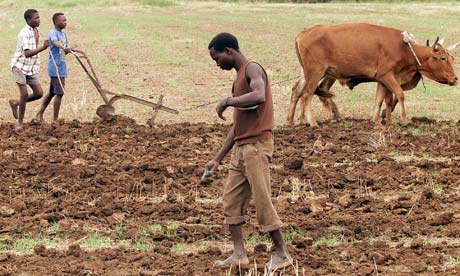
 Shiro Keziah Wachira

 Global Changemakers are accepting applications for the upcoming Global Youth Summit 2011, which will take place in the UK from 13-19 November. The call for applications is open for social entrepreneurs, community activists and volunteers aged 16-19 from around the world.

